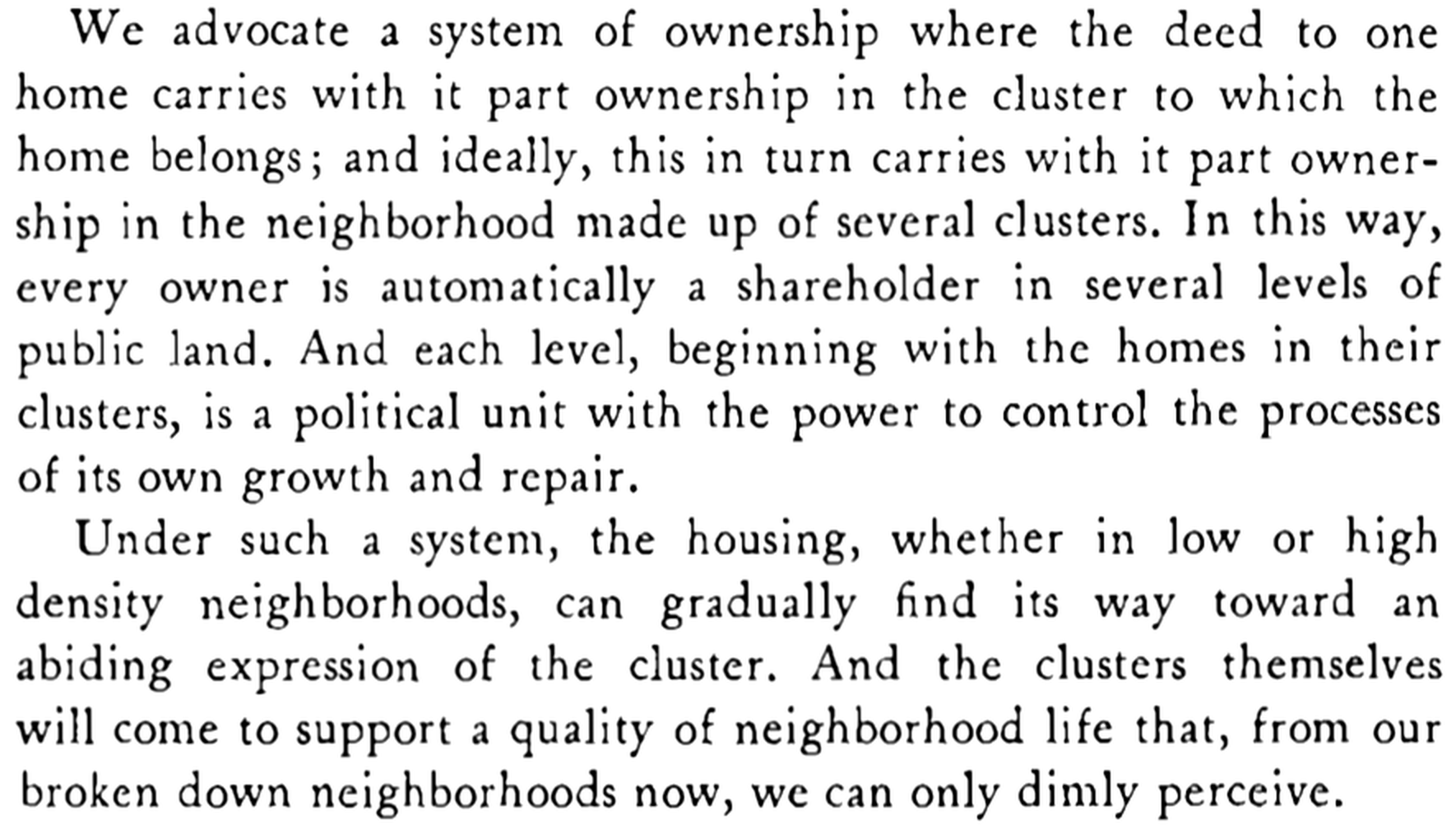
The Prophet’s Fingers: City Country Fingers
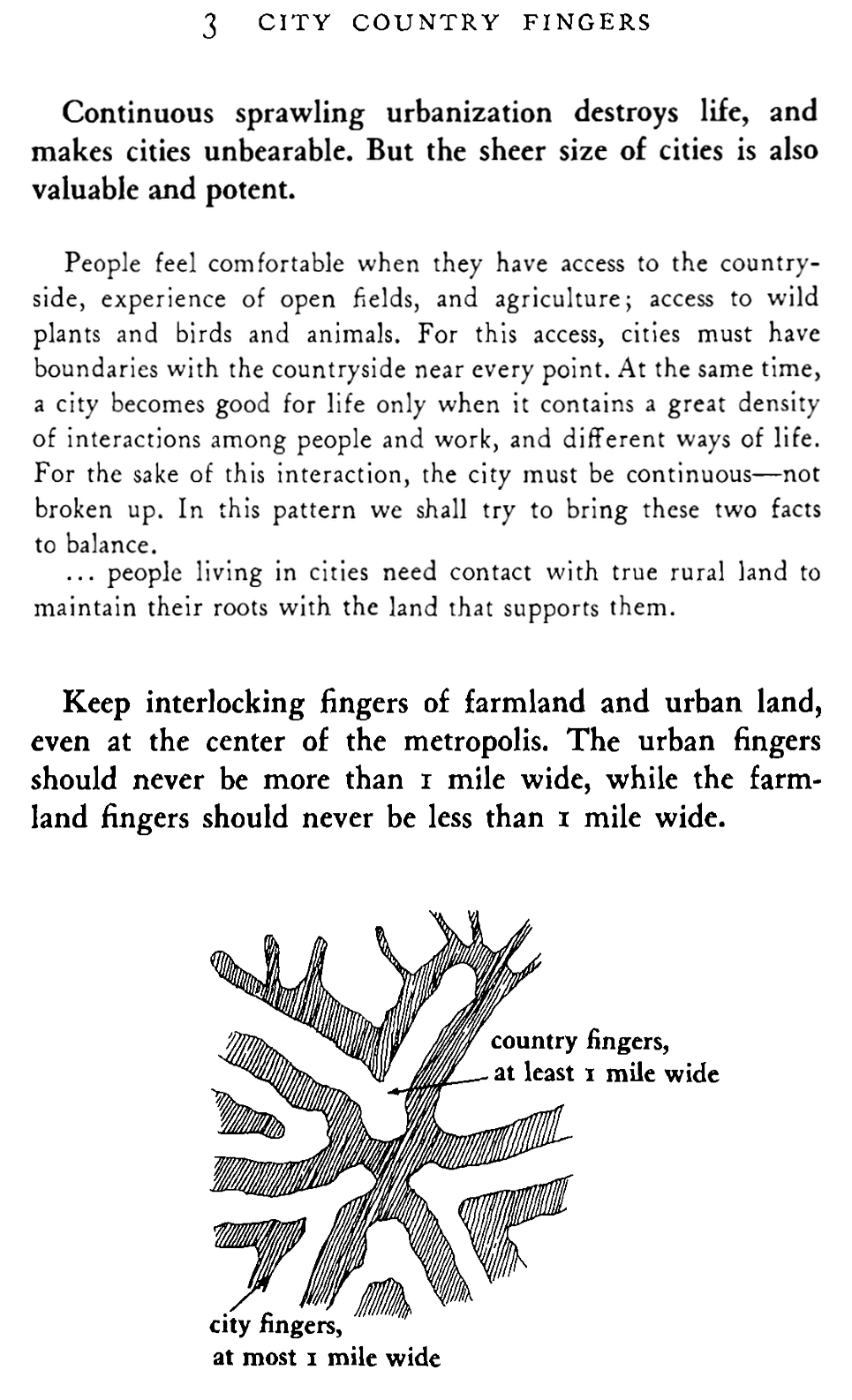
- Identify spaces, however small, which are good candidates for communally managed plots stewarded by self-governing communities.
- Recruit locals and provide educational and material resources relevant to the projects they commit to.
The following three projects lay the groundwork for broader implementation of the City Country Fingers pattern by establishing small working examples embodying its underlying principle.
Pilot project 1POWER LINE GARDENS
Coordinating between power companies and the neighbors whose residences abut or are near power lines to manage the growth of the area under the lines through community gardens. Shares of plant stock, produce and, where applicable, animal products are divided among the members of the collective, who together establish protocols for managing those spaces.
Pilot project 2RECLAIMING ASPHALT
Neighborhoods securing code variances to reclaim space from cars for pedestrians, using the process Christopher Alexander lays out in The Nature of Order, Book 3, A Vision of a Living World.
The neighborhood is mapped in four colors: red for cars, yellow for people on foot, green for gardens and gray for buildings. Variances are then sought step by step to shrink the red and break up its continuity, so that the yellow can grow and the green can take on a coherent shape.




Christopher Alexander, The Nature of Order, Book 3: A Vision of a Living World
Pilot project 3MICRO COURTYARDS
Micro courtyards established where four residential house plots meet, eventually opening into green corridors that serve as rights of way connecting one multi-home micro courtyard to another. Each courtyard is governed by its own members. Where courtyards connect, they form a second level of self-governance for the shared corridor.